
 English
 Arabic
 Chinese (Simplified)
 Dutch
Dutch French
 German
 Italian
 Korean
 Portuguese
 Russian
 Spanish
 Swedish
 Thai
Thai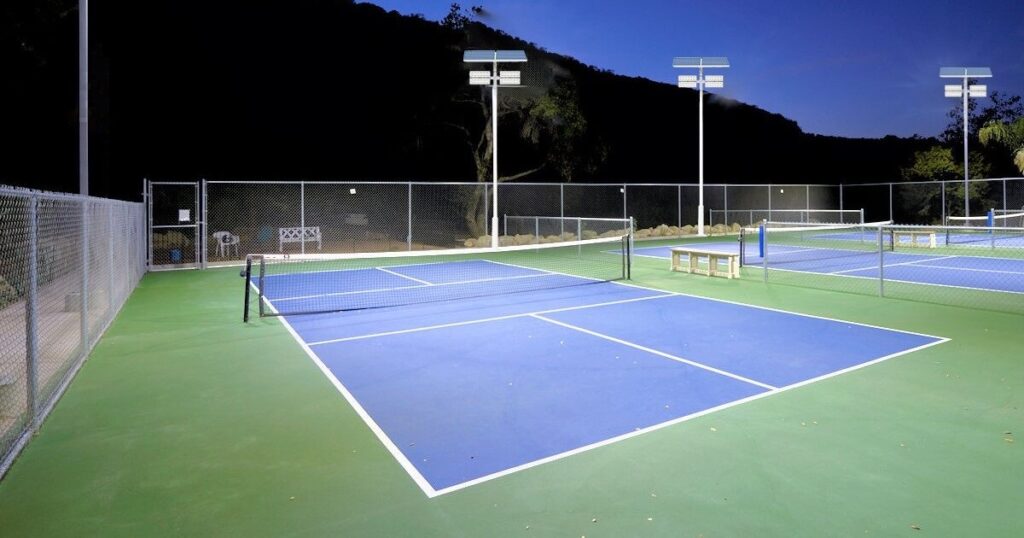
Tennis is a popular sport that can be enjoyed day and night, but proper lighting is crucial to ensure safe and enjoyable gameplay during evening matches. Solar LED lighting for tennis courts offers an eco-friendly and cost-effective solution. This guide will help you understand the key considerations and steps involved in setting up solar lighting for your tennis court.
Before installing solar lighting, assess your tennis court:
1. Why Choose Solar LED Lighting
Solar LED lighting offers several advantages for tennis court illumination:
- Sustainability: Solar lighting is powered by renewable energy, reducing your carbon footprint.
- Cost-Efficiency: Lower energy bills and minimal maintenance costs.
- Easy Installation: No need for complex wiring or electrical connections.
- Energy Independence: Operate even during power outages.
- Customizable: Adjust brightness and timers to suit your needs.
- Longevity: LED lights have a longer lifespan compared to traditional bulbs.
2. Assessing Your Tennis Court
- Court Size: Determine the dimensions of your court to calculate the number of lights required.
- Lighting Standards: Check local lighting standards and regulations.
Outdoor Tennis Court Lighting Levels are normally divided into these four levels:
Class I: Professional level: min. 125-foot candles / 1250 lux
Class II: College and medium level: min. 50-foot candles / 500 lux
Class III: High school and private clubs: min. 30-foot candles / 300 lux
Class IV: Recreational: min. 20-foot candles / 200 lux
- Court Orientation: Consider the court’s orientation in relation to the sun for optimal solar panel placement.
3. Selecting the Right Solar Lighting System
When choosing a solar lighting system:
- Brightness: Select lights with appropriate brightness (measured in lumens) for tennis courts. For single LED light, bornsolar suggests you choose LED lamps with more than 160-180LM/watt, high efficiency means less power is required.
- Battery Capacity: Ensure sufficient battery capacity for continuous night-time operation. Bornsolar suggests you choose LiFePo4 Lithium Battery, which has much more cycle charging times than traditional lead acid battery and is much safer in delivery.
- Solar Panel Size: Choose panels that can generate enough energy to charge the batteries. Bornsolar expert engineer will configure the correct number of solar panels to be used according to your exact needs.
- Motion Sensors: Opt for systems with motion sensors to conserve energy when the court is not in use. Bornsolar’s solution will also include a remote controller for easy control of the ON/OFF of the lights.
- Weather Resistance: Ensure the system is built to withstand various weather conditions, the whole set of lighting shall reach IP65 protection level at least.
4. Installation Process
Here are the steps to install solar lighting for your tennis court:
- Site Preparation: Clear any obstacles that could block sunlight to the solar panels.
- Solar Panel Placement: Position the solar panels in a location that receives maximum sunlight throughout the day. Tilt and orientation may need adjustment for optimal energy collection.
- Battery and Controller Installation: Mount the battery and lighting controller in a weatherproof enclosure. Bornsolar will integrate the smart controller inside the battery box for easy installation on-site.
- Light Fixture Installation: Install LED fixtures evenly around the court, ensuring uniform illumination.
- Wiring: Connect the lights, solar panels, batteries, and controllers according to the manufacturer’s instructions.
- Testing: Test the system to ensure proper functioning, including brightness levels remote controller, and motion sensors.
5. Maintenance and Care
To maintain your solar tennis court lighting:
- Regular Cleaning: Keep solar panels free of dirt and debris to maximize energy generation.
- Inspect Wiring: Periodically check wiring for any damage.
- Battery Health: Monitor battery health and replace them when needed. This will only happen 5 years later. The normal lifespan for the battery we use can reach as long as 10 years under proper use.
- LED Bulbs: 15 years later, replace LED bulbs as they near the end of their lifespan.
6. Tips for Optimal Performance
To get the most out of your solar lighting system:
- Timer Settings: Adjust timers to match your court’s usage patterns.
- Motion Sensors: Use motion sensors to reduce energy consumption when the court is empty.
- Seasonal Adjustments: Tilt solar panels seasonally to capture more sunlight in winter.
7. Cost and ROI Considerations
While solar lighting systems may have higher upfront costs, consider the long-term savings on energy bills and maintenance. Calculate the return on investment (ROI) over the life of the system to justify the initial expense.
Normally you can earn the investment back within 3 years.
8. Conclusion
Solar LED lighting for tennis courts offers an eco-friendly and cost-effective solution for illuminating your court at night. With proper planning, installation, and maintenance, you can enjoy well-lit tennis matches while reducing your environmental impact and saving on energy costs. Make sure to consult with a reputable solar lighting provider to tailor a system to your specific needs and location. Bornsolar is an expert supplier for solar lighting on outdoor tennis courts, please contact our engineer for the customized solutions.