
 English
 Arabic
 Chinese (Simplified)
 Dutch
Dutch French
 German
 Italian
 Korean
 Portuguese
 Russian
 Spanish
 Swedish
 Thai
Thai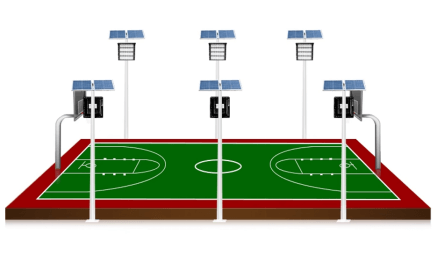
In recent years, outdoor sports have gained significant momentum, driving a need for efficient and sustainable lighting solutions. Basketball, being one of the most popular sports worldwide, demands precise and well-designed lighting to ensure player safety and enhance the overall gaming experience. As we continue to embrace sustainable practices, the integration of solar-powered LED lighting has emerged as an innovative and eco-friendly approach to meet the requirements of outdoor basketball court lighting. This comprehensive guide aims to provide valuable insights into the world of solar-powered basketball court lighting, covering essential aspects from design considerations to economic viability.
Trends of Basketball Court Lighting
With the rising demand for energy-efficient and environmentally friendly lighting solutions, the trend in outdoor basketball court lighting has shifted towards sustainable technologies, including solar-powered LED systems. These systems have gained prominence due to their ability to harness renewable energy and reduce dependence on traditional power sources.
Basketball Court Lighting Standards
Basketball court lighting standards are guidelines set by various organizations to ensure optimal visibility, safety, and performance during gameplay. Industry standards such as those established by the Illuminating Engineering Society (IES) and the American National Standards Institute (ANSI) provide comprehensive guidelines for illuminance levels, uniformity, glare control, and color rendering index (CRI) for outdoor basketball court lighting. While the exact standards from different countries may vary slightly depending on the organization and location, the following parameters are generally considered for basketball court lighting:
1. Illuminance Levels: Illuminance refers to the amount of light falling on a surface. For basketball courts, the recommended illuminance levels typically range between 200 lux (low-level recreational play) to 1000 lux (professional-level play). The illuminance levels may vary depending on the type of play and the standards set by the regulatory body or organization.
| Activity Level | Illuminance (lux) | No. of Pole (set) |
| Recreational play | 100-200 | 6 |
| Amateur or semi-professional play | 200-500 | 8 |
| Professional play | 500-1000+ | 12 |
- Uniformity: Uniformity ensures consistent lighting levels across the entire playing area, minimizing shadows and preventing abrupt changes in brightness. The uniformity ratio is often recommended to be within 0.7 to 0.8 to maintain a balanced and well-illuminated playing surface.
- Glare Control: Glare, caused by excessive brightness contrast, can significantly impact players’ performance and safety. The standards emphasize the importance of minimizing glare to provide clear visibility without causing discomfort or visual hindrance to the players and officials. Shielding the light sources and utilizing appropriate fixtures help in controlling glare effectively.
- Color Rendering Index (CRI): CRI measures the light source’s ability to reveal the true colors of objects compared to natural light. For basketball courts, a CRI of 70 or higher is typically recommended to ensure accurate color perception, enabling players to distinguish between different colors and objects accurately during the game.
Factors to Consider for Designing the Lighting System for an Outdoor Basketball Court
When designing a solar-powered lighting system for an outdoor basketball court, several factors need to be considered:
- Location and Orientation: Analyzing the geographical location and the court’s orientation to maximize solar exposure. Make sure there are no trees of other objects that may shade the sunlight.
- Luminance Requirements: Determining the ideal lighting levels for players and spectators, ensuring uniform illumination across the entire court.
- Energy Storage Capacity: Assessing the required battery capacity to store energy efficiently for extended periods, especially during low-sunlight periods. How many hours do you expect to play at the court per night?
- Weather Resistance: Incorporating durable and weather-resistant materials to ensure the system’s longevity and performance in various climatic conditions, normally all lamp fixtures shall meet IP65 protection level at least.
- Maintenance Accessibility: Planning for easy access and maintenance of the lighting system components to facilitate periodic inspections and repairs.
Why Choose Solar LED Lighting for the Basketball Court
Solar LED lighting offers a myriad of advantages that make it an ideal choice for outdoor basketball court lighting:
- Energy Efficiency: Harnessing renewable energy to power the lighting system, resulting in reduced energy consumption and lower operational costs.
- Environmental Sustainability: Minimizing the carbon footprint and promoting eco-friendly practices by utilizing clean energy from the sun.
- Cost Savings: Eliminating the need for extensive electrical infrastructure and reducing monthly utility bills, leading to long-term cost savings.
- Easy Installation: Simplifying the installation process without the necessity for complex wiring or grid connections, making it a viable option for remote locations.
- Reliable Performance: Ensuring consistent lighting performance through advanced battery storage technology and efficient LED fixtures, even during overcast weather conditions.
Benefits Comparison Chart between Traditional Grid Power Lighting and Solar-Powered LED Lighting for Basketball Court Lighting
| Parameters | Traditional Grid Power Metal Halide Lighting | Solar Powered LED Lighting |
| Energy Consumption | High | Low |
| Environmental Impact | Significant | Minimal |
| Initial Investment | High | Moderate |
| Operational Costs | High | Low |
| Maintenance Needs | Regular | Minimal |
| Adaptability | Limited by infrastructure | Flexible |
Best Layout for the Lighting Pole
To ensure optimal lighting coverage and minimal glare, a layout with evenly distributed lighting poles along the perimeter of the basketball court is recommended. Additionally, incorporating adjustable fixtures can help direct light precisely onto the court, reducing light spillage and enhancing visibility for players and spectators.
Return on Investment (ROI) for Solar Lighting Investment
The ROI period for a solar-powered LED lighting system varies based on factors such as the initial investment, local energy costs, maintenance requirements, and available sunlight. However, on average, basketball court owners can expect to recoup their investment within 3 to 5 years, followed by substantial long-term savings on energy and maintenance costs.
As the global focus on sustainable energy solutions intensifies, the integration of solar-powered LED lighting systems presents an innovative and economically viable approach for outdoor basketball court lighting. By considering the key elements outlined in this guide, basketball court owners can make informed decisions that not only enhance the gaming experience but also contribute to a greener and more sustainable future.
Conclusion:
Solar-powered LED lighting systems offer a compelling solution for outdoor basketball court lighting, aligning with the global shift towards sustainable energy practices. By considering the comprehensive insights and recommendations provided in this guide, professionals and stakeholders can make informed decisions that not only elevate the sports experience but also contribute to a greener and more sustainable future for the outdoor sports industry.
Bornsolar is an expert solar sport court lighting solution provider, contact us for a customized solar basketball court lighting system, reduce the electricity bill and turn to green playground.